
Oh Enemy! - Varavara Rao.
A page from my 1991 Diary
To chase a dream.
i no longer have the strength, once i believed i had,
To reshape this world.
Somewhere along the way,
That anger of a youth died out.
And that twirled moustache shaved off.
Now, As i run the rat race
Bound to a keyboard and a glowing screen,
My shoulders have grown narrow,
Thoughts, even narrower.
My identity reduced to - The house i own,
The balance i keep.
The man in the mirror feels like a stranger,
His gaze unfamiliar, his voice silent.
Yet, the fragrance of those bygone days’ drifts back,
When I flip the worn-out pages
Of my Bharati.
-Krishna-

John Le Carre was born, David John Morre Cornwell. His
mother left them when he was 5 (he tracked her later- but could not mend the
relationship) and his father Ronnie was a notorious conman, who would use David
and his elder brother in all his schemes and also beat them up regularly. David
never went to a proper school and grew up without love or books. This
disturbing childhood left a deep scar (“Until I die the father-son relationship
will obsess me”) and would be a recurrent theme in his books in some shade;
especially so in the 1996 semi-autobiographical novel ‘A Perfect Spy’.
David had to adopt a pen name as he was a spy himself and
worked with MI5 and MI6 and started writing his books while in service. His
first book was 'Call of the Dead' in 1961. But it was the ‘The spy who came in
from the cold' that turned the limelight on John Le Carre and he resigned from the
service (probably asked to leave) and became a full-time writer. His writing
was dark and realistic compared to the flamboyant and glamorous world created
by the other British spy novelist Ian Fleming (who was also a British
intelligence officer). The characters they created were also starkly
contrasting; George Smiley and James Bond respectively. Smiley, is a lonely,
brooding, (sometimes bumbling) and pudgy (often, he is referred to as a ‘toad’)
character who, nevertheless, is a brilliant spy who is devoted to his country
and profession.
Among this many books, I especially love the Smiley series
but my favorite Le Carre has to be Tinker Tailor Soldier Spy (also made into a
successful movie in which a shapeshifting Gary Oldman plays a wonderful Smiley
version). In this maze of a story, Smiley goes about to find the Russian mole inside the agency
and becomes the head of the crumbling MI6 the Intelligence agency known
internally as the Circus and starts to rebuild it (Le Carre created a
delightful set of spy jargons like Circus). The 6 part BBC mini-series
“Smiley’s People” where Alex Guinness plays Smiley is riveting too – this is
available on YouTube. But that is just me; if you have to read just one of his
novels or looking for a book to start, then “The Spy Who Came in From the Cold”
is the place to start. This gripping story would raise many moral
questions and will question the assumption that West was morally superior (during the cold war era).
Le Carre’s plots are complex and covered by many layers of intrigue; he brought a seriousness to the genre by creating a dark and treacherous world driven by the political interest that was morally ambiguous, especially during and post-cold war era. After the end of the espionage era; Le Carre takes up new villains in the form of corrupt businessmen, arms dealers, terrorists, and even big pharma and continued to write in everlasting righteousness and integrity till the ripe old age of 88 (his last book Agent Running in the Field (2019) is written with Brexit as the backdrop). For all his formidable writing, he notoriously shied away from recognition; he turned down an OBE; withdrew from the Booker nomination, and gave away the Olof Palme prize money to Doctors without Borders. With his passing, a giant who wrote serious fiction, and who wrote that, better than many serious non-fiction writers passed away. Writers come and go; but someone like Le Carre, who creates a genre, rules it for nearly 60 years, and thus influencing a whole generation of authors and creators, they don’t come very often.

John Le Carre passed away on the 12th of December 2020.
My Dear,
As we complete 3 years of shutting ourselves in, I thought of writing this to you, not because we are apart, but because we may read this on a day in the future when we want to look back at our best during the worst of times.
As home and office blended with each other and as the days and nights blended together, I am happy to be still working, more than working, I am glad I am still alive and that we are still a family, staying intact. I never thought I will miss my commute through these Pune roads, but there it is, I do miss the long journey to the office and back, I miss that bad canteen food, and to my surprise, I miss some people at work too (no, I am not going to name them nor am I going to say why I am surprised). But these are good problems to have, no?
Over these 3 years, we have come closer, we got to know each other better, we support each other in all we do, small and big. Our early thoughts and fear that spending more time alone, just the two of us, would only breed contempt proved to be wrong, rather happily. Of course, we get to see the rest of the world only through a zoom
I do not know how much longer we need to go on like this, do not know when we will have a vaccine or a pill to feel safer, to get out, and go back to what we used to call normal. We are tired of news of a miracle or a miracle medicine and have in fact stopped believing in all such news. We just brace for the lockdowns, one after the other. We shut out all data of the disease and the details of how many died. We just think of, ‘what to cook for dinner’ (with what little we have) or ‘what to watch on NetFlix or Prime’. We just take one small challenge at a time; we just look at each day on its own. After all these years, we have started to live in the present. A Zenish, mindful living; some would call it.
Yes, we have changed in other ways too, mostly for the good, we have learned to be frugal, right from what we eat, and to any other resource we use. We have learned to be thankful for trivial things. We are healthier than ever before.
Still, when I see the photos you have kept on display or when I hear the sound from the conch shell (which I found while cleaning the house), I slip back in time and recall how the waves used to wet our feet again and again, how you used to run those grains of sand through your fingers. Most of all, I yearn to just sit with you, and watch the full moon bathe the Shore Temple and turn the sea to silver… just, one more time.
Love,
K
July 17, 2023.
 I especially liked ‘Between the world and me’, which is written in the form of a letter from the author to his 14-year-old son, Samori. The book is an intense account of what it means to grow up and be black in America today. The writing reflects the depth of the author’s fear and anger while he was growing up in West Baltimore. Since Mr. Coates is trained as a poet, the book is structured and written elegantly. At some places, it made me pause and deliberate at the depth of the issue even today, but I reserve my thoughts as I will never be able to fully comprehend the feeling of being a minority and fighting against centuries-old systemic oppression.

 Our imagined orders of yesterday
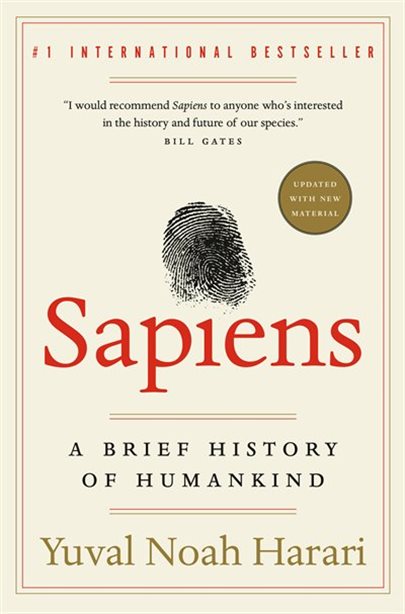 Harari is an Israeli
historian and a professor in the Department of History at the Hebrew University
of Jerusalem. He is gay, vegan and a practitioner of Vipasana meditation for 20
years (and vocal about all of them). Harari specialized in medieval and
military history at the Hebrew University of Jerusalem and has a Doctorate from
Oxford. He has many best sellers and articles to his name, Sapiens being the
foremost among them. Sapiens was published in Hebrew in 2011, became a national
best seller in Israel and was published in English in 2014; it has since been
translated into some 50 languages. It made Harari a superstar.
Harari is an Israeli
historian and a professor in the Department of History at the Hebrew University
of Jerusalem. He is gay, vegan and a practitioner of Vipasana meditation for 20
years (and vocal about all of them). Harari specialized in medieval and
military history at the Hebrew University of Jerusalem and has a Doctorate from
Oxford. He has many best sellers and articles to his name, Sapiens being the
foremost among them. Sapiens was published in Hebrew in 2011, became a national
best seller in Israel and was published in English in 2014; it has since been
translated into some 50 languages. It made Harari a superstar. The future according
to Harari, holds dangers and opportunities. From what I read, opportunities for
a minority and dangers for the majority, primarily because of the gaps between
rich and poor and a huge class of humans who would be rendered useless thru AI.
We are seeing both these scenarios are already in play, the divide between poor
and rich is wider than ever before – (the Oxfam report states that the wealth
gap continued to widen in 2017, with 82% of global wealth generated going to
the wealthiest 1%. Another report states that 2,153 billionaires owned as much
wealth as the bottom 4.6 billion people in 2019) and more and more workers
losing jobs to AI, robotics and automation in general and unable to repurpose themselves
(Forrester predicts job losses of 29% by 2030 with only 13% job creation to
compensate). Such economic disparity along with job loss is a perfect recipe
for political instability and a general moral crisis (Widening income
inequality is the defining challenge of our time- 2015 IMF report). History
proves that humans have not handled power responsibly, for us the relationship between
power and responsibility is inversely proportional.
The future according
to Harari, holds dangers and opportunities. From what I read, opportunities for
a minority and dangers for the majority, primarily because of the gaps between
rich and poor and a huge class of humans who would be rendered useless thru AI.
We are seeing both these scenarios are already in play, the divide between poor
and rich is wider than ever before – (the Oxfam report states that the wealth
gap continued to widen in 2017, with 82% of global wealth generated going to
the wealthiest 1%. Another report states that 2,153 billionaires owned as much
wealth as the bottom 4.6 billion people in 2019) and more and more workers
losing jobs to AI, robotics and automation in general and unable to repurpose themselves
(Forrester predicts job losses of 29% by 2030 with only 13% job creation to
compensate). Such economic disparity along with job loss is a perfect recipe
for political instability and a general moral crisis (Widening income
inequality is the defining challenge of our time- 2015 IMF report). History
proves that humans have not handled power responsibly, for us the relationship between
power and responsibility is inversely proportional. Steven Levitsky and Daniel Ziblatt are Harvard University’s political scientists and this book by them comes at a time, when democracies across the world are being threatened by right wing alpha male leaders. The book is a warning, an alarm, to the ascension of demagogues and helps to identify the preceding signs. Although the book focuses on the US (the idea of the book is prompted by the election of Trump) it uses case studies of leaders from other countries including Putin in Russia, Erdoğan in Turkey, Orbán in Hungary and Maduro in Venezuela. Based on these studies, the authors outline four key indicators, or warning signs, of authoritarian behavior that is detrimental to democracy (1) the rejection, in words or action, of the democratic rules of the game, (2) the denial of the legitimacy of political opponents, (3) toleration or encouragement of violence, and (4) a willingness to curtail civil liberties of opponents, including the media. If we consider these key indicators, there is no denying the fact that Democracies across the world are facing existential threats from big, loud mouthed and divisive nationalist leaders.


.png)


